


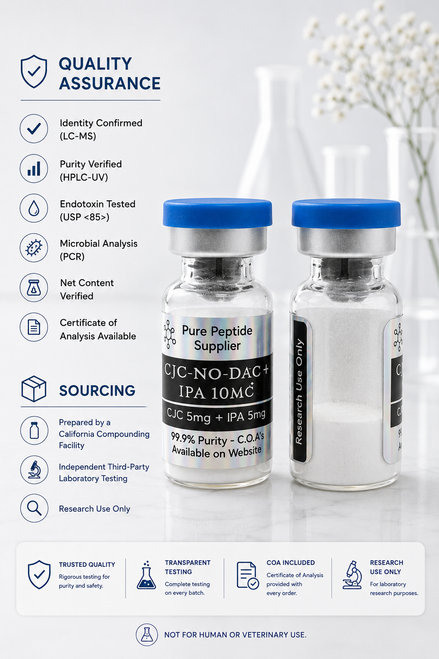
CJC-1295 / Ipamorelin Research Overview
Overview
CJC-1295 and Ipamorelin are two investigational peptides that have been extensively studied for their effects on the growth hormone (GH) axis. Because they interact with distinct physiological signaling pathways involved in endogenous GH secretion, the peptides are frequently evaluated together in laboratory and clinical research examining growth hormone physiology.
CJC-1295 is a synthetic analog of growth hormone-releasing hormone (GHRH). The formulation containing a Drug Affinity Complex (DAC) incorporates a modified peptide structure that reversibly associates with circulating albumin, extending systemic exposure compared with native GHRH. Human pharmacokinetic studies have demonstrated prolonged circulating activity following administration, making CJC-1295 an important research tool for investigating sustained GHRH receptor stimulation.
Ipamorelin is a synthetic growth hormone secretagogue that selectively activates the growth hormone secretagogue receptor (GHS-R1a), the primary receptor involved in ghrelin-mediated GH signaling. Published laboratory and human clinical studies have reported that Ipamorelin demonstrates greater receptor selectivity than earlier growth hormone secretagogues, with comparatively limited effects on cortisol, prolactin, and adrenocorticotropic hormone (ACTH) under evaluated study conditions.
Scientific interest in combining CJC-1295 and Ipamorelin is based on established endocrine physiology. The GHRH receptor and GHS-R1a activate separate intracellular signaling pathways within anterior pituitary somatotrophs. Experimental studies have investigated whether simultaneous activation of these pathways influences the magnitude and pattern of endogenous growth hormone secretion compared with activation of either pathway individually.
Current evidence supporting this peptide combination consists primarily of mechanistic studies, pharmacokinetic investigations, pharmacodynamic research, and individual clinical trials evaluating each peptide separately. Although the biological rationale for combined administration is well established, large randomized clinical trials evaluating the combination remain limited.
Key Scientific Characteristics
-
Combination of a synthetic GHRH analog and a selective growth hormone secretagogue
-
Investigated for its effects on endogenous growth hormone physiology
-
CJC-1295 with DAC demonstrates prolonged systemic activity through reversible albumin binding
-
Ipamorelin selectively activates the GHS-R1a receptor involved in endogenous GH signaling
-
Human pharmacodynamic studies have reported increases in circulating GH and IGF-1 under controlled study conditions
-
Combination research is supported primarily by complementary mechanisms and endocrine physiology
-
Long-term clinical evidence evaluating the combined protocol remains limited
Research Notes
Published laboratory investigations and human clinical studies have demonstrated that CJC-1295 produces sustained activation of GHRH signaling with corresponding increases in circulating growth hormone and insulin-like growth factor-1 (IGF-1) under evaluated study conditions. Independent investigations of Ipamorelin have reported selective stimulation of endogenous GH secretion with relatively limited effects on other anterior pituitary hormones compared with earlier secretagogues.
Ongoing research continues to examine the physiological consequences of dual pathway activation on growth hormone dynamics, endocrine signaling, metabolism, and related biological processes. Although mechanistic evidence supporting the combination is substantial, additional randomized controlled clinical trials are needed to further characterize its pharmacology, long-term safety, and biological effects.