


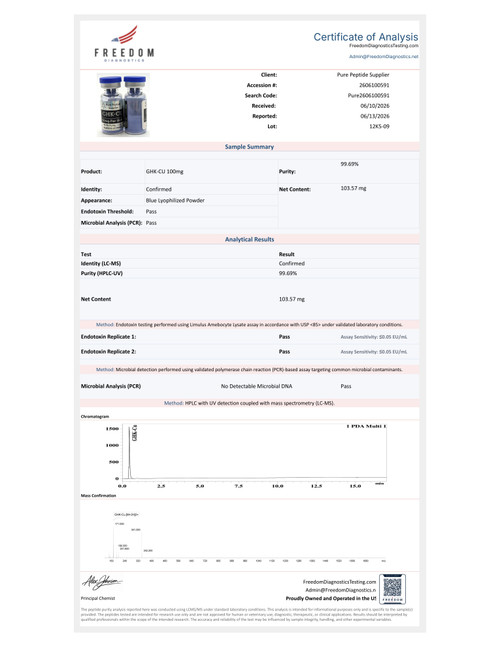
GHK-Cu (Copper Tripeptide) Research Overview
Overview
GHK-Cu is an endogenous copper-binding tripeptide composed of the amino acids glycine, L-histidine, and L-lysine. First identified in human plasma during the early 1970s, GHK-Cu has become one of the most extensively investigated endogenous peptides in molecular biology, extracellular matrix research, and dermatologic science. Since its discovery, laboratory investigations, animal studies, and human clinical research have examined its role in cellular signaling, extracellular matrix biology, connective tissue physiology, and gene expression.
Unlike many investigational peptides, GHK-Cu occurs naturally within the human body and has been identified in plasma, saliva, and urine. Published observational studies have reported that endogenous GHK-Cu concentrations generally decline with advancing age, prompting continued investigation into the biological significance of these changes and their relationship to cellular physiology.
Copper is an essential component of the GHK-Cu complex and is required for its biological activity. Experimental studies have demonstrated that GHK-Cu functions as a high-affinity copper carrier capable of delivering copper ions to cells and tissues, where copper-dependent enzymes participate in numerous biochemical processes involving extracellular matrix biology, cellular metabolism, oxidative stress responses, and connective tissue physiology.
Laboratory investigations examining gene expression have reported that exposure to GHK-Cu is associated with modulation of numerous genes involved in extracellular matrix biology, antioxidant pathways, inflammatory signaling, and other cellular processes. These findings continue to be investigated to further characterize the molecular mechanisms through which GHK-Cu influences cellular function.
Published research involving topical formulations has generated a substantial body of laboratory and human clinical data evaluating GHK-Cu under controlled study conditions. In comparison, published investigations evaluating injectable formulations remain limited and continue to represent an active area of scientific research.
Key Scientific Characteristics
-
Endogenous copper-binding tripeptide
-
Naturally occurring peptide identified in multiple human tissues and body fluids
-
Copper ion is required for biological activity
-
Extensively investigated in extracellular matrix biology, connective tissue physiology, and dermatologic research
-
Laboratory investigations have reported modulation of multiple cellular signaling pathways and gene expression profiles
-
Endogenous concentrations have been evaluated in relation to aging and normal physiology
-
Injectable formulations remain investigational and are not approved by the U.S. Food and Drug Administration for therapeutic use
Research Notes
Current scientific evidence involving GHK-Cu is derived from laboratory investigations, animal studies, and human clinical research, with the largest body of published literature involving topical formulations evaluated under controlled study conditions. Research involving injectable administration remains comparatively limited and should be interpreted independently from topical studies due to differences in formulation, route of administration, and study design.
Experimental investigations have demonstrated broad effects on cellular signaling and gene expression; however, additional randomized controlled clinical studies are necessary to further characterize the pharmacology, biological activity, and long-term safety profile of injectable GHK-Cu.