

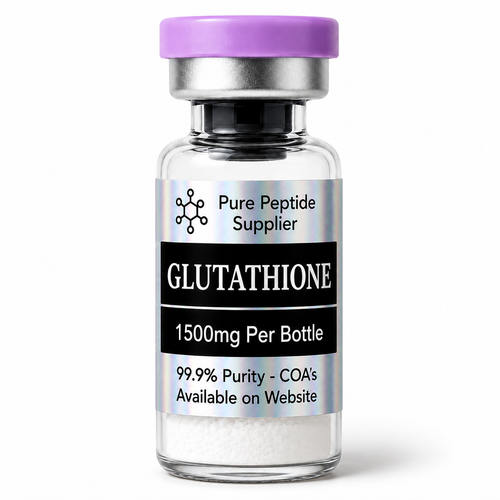
Glutathione Research Overview
Overview
Glutathione (GSH) is a naturally occurring tripeptide composed of the amino acids glutamine, cysteine, and glycine. It is present in virtually all living cells and serves as one of the most important intracellular antioxidants, playing a central role in cellular redox homeostasis, detoxification processes, and immune function.
The glutathione molecule contains a unique gamma-glutamyl linkage between glutamate and cysteine, which confers resistance to intracellular peptidases and contributes to its stability. It exists in two forms: reduced glutathione (GSH), which is the active antioxidant form, and oxidized glutathione (GSSG), which is formed when GSH donates electrons to neutralize reactive oxygen species (ROS). The ratio of GSH to GSSG within cells is an important indicator of redox status.
Glutathione functions as a cofactor for several enzymes, including glutathione peroxidases and glutathione S-transferases, which are involved in detoxifying xenobiotics, metabolizing lipid peroxides, and maintaining protein sulfhydryl groups. Additionally, glutathione is involved in the recycling of other antioxidants, including vitamins C and E.
Laboratory research, animal studies, and human clinical investigations have examined glutathione in diverse contexts, including oxidative stress, cellular protection, immune function, and metabolic health. Injectable glutathione formulations have been investigated in clinical settings, although controlled evidence remains variable across different study populations and indications.
Endogenous glutathione concentrations are influenced by multiple factors, including nutritional status, oxidative stress, aging, and pathological conditions. Depletion of intracellular glutathione has been associated with increased susceptibility to oxidative damage, prompting research into strategies to maintain or restore glutathione levels through dietary supplementation or exogenous administration.
Key Scientific Characteristics
Endogenous tripeptide composed of glutamine, cysteine, and glycine
Present in virtually all living cells
Functions as a primary intracellular antioxidant
Participates in redox homeostasis, detoxification, and immune regulation
Exists in reduced (GSH) and oxidized (GSSG) forms
Acts as a cofactor for glutathione peroxidases, glutathione S-transferases, and other enzymes
Injectable formulations remain investigational
Not approved for all potential applications by the U.S. Food and Drug Administration
Research Notes
Glutathione is one of the most extensively studied endogenous molecules in redox biology and cellular physiology. Its role in maintaining intracellular redox balance and protecting cells from oxidative stress has been investigated across diverse experimental models, tissue types, and physiological conditions.
Published clinical research has evaluated glutathione in various contexts, with findings varying across study designs, routes of administration, dosing protocols, and outcome measures. Injectable glutathione formulations have been examined in specific clinical settings, although the overall body of controlled evidence remains limited. Additional research is needed to further characterize the pharmacological properties and clinical significance of exogenous glutathione administration.