

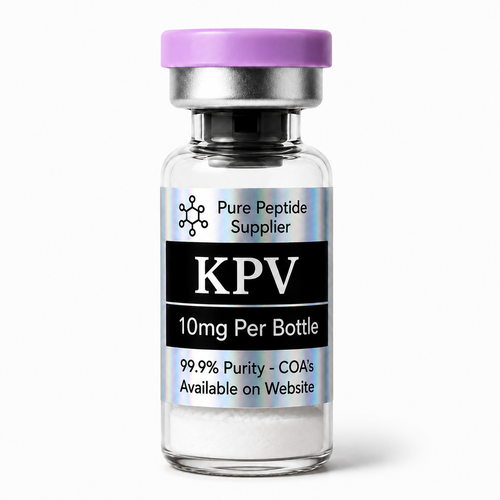
KPV Research Overview
Overview
KPV is a naturally occurring tripeptide composed of the amino acids lysine, proline, and valine. It is a fragment derived from alpha-melanocyte-stimulating hormone (α-MSH) and has been investigated for its biological activity, which appears to be distinct from that of the parent hormone. The peptide's anti-inflammatory properties have been the primary focus of research interest.
The KPV sequence represents a portion of the α-MSH molecule that has been reported to retain certain biological activities while lacking the melanotropic effects associated with the full-length peptide. This distinction is important because it suggests that the anti-inflammatory effects of α-MSH may be mediated through a domain distinct from its melanogenic activity. Laboratory investigations have examined KPV for its effects on inflammatory mediators, cytokine signaling, and cellular responses to stress.
Research has focused on KPV's potential anti-inflammatory properties, with experimental studies reporting modulation of inflammatory pathways under specific study conditions. The peptide has been investigated in laboratory models of immune function, cellular stress, and inflammation. Studies have examined its effects on pro-inflammatory cytokine production, immune cell activation, and inflammatory signaling cascades.
The precise molecular mechanisms through which KPV exerts its anti-inflammatory effects remain incompletely characterized. Research has suggested that the peptide may interact with specific receptors or intracellular signaling pathways involved in the regulation of inflammatory responses. However, definitive conclusions regarding its mechanism of action await further investigation.
The current body of evidence for KPV is derived primarily from preclinical research. Human clinical investigations remain limited, and the biological activity of KPV has not been extensively characterized in controlled clinical settings.
Key Scientific Characteristics
Endogenous tripeptide composed of lysine, proline, and valine
Derived from alpha-melanocyte-stimulating hormone (α-MSH)
Investigated for anti-inflammatory properties
Demonstrates effects distinct from full-length α-MSH
Lacks the melanotropic effects associated with intact α-MSH
Current evidence derived primarily from laboratory investigations and animal studies
Human clinical research remains limited
Not approved by the U.S. Food and Drug Administration for therapeutic use
Research Notes
KPV has been investigated as a research tool for studying the anti-inflammatory effects of α-MSH fragments. Its biological activity has been examined in various experimental models, with studies reporting modulation of inflammatory mediators under specific conditions.
Additional research is needed to further characterize the pharmacological properties, biological activity, and safety profile of KPV. Ongoing investigations continue to examine its potential applications in inflammation research and related areas.