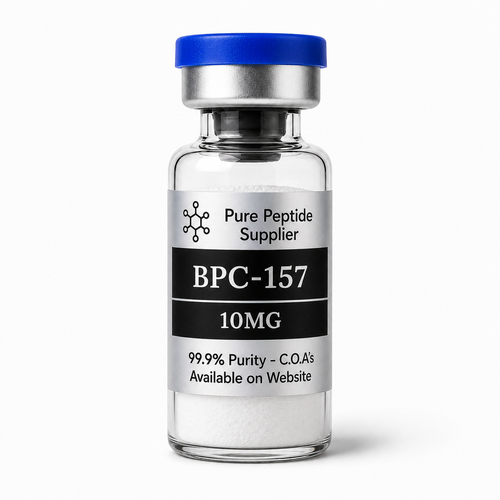


Wolverine Stack (BPC-157 + TB-500) Research Overview
Overview
The Wolverine Stack is a commonly referenced peptide combination consisting of BPC-157 (Body Protection Compound-157) and TB-500, a synthetic peptide derived from the active region of thymosin beta-4. Although the combination has become well known within peptide research, published scientific literature has primarily evaluated each peptide independently rather than as a combined formulation.
Scientific interest in the Wolverine Stack is based on the distinct but potentially complementary biological mechanisms reported for its individual components. Laboratory investigations and animal studies have examined BPC-157 in relation to growth factor signaling, angiogenic pathways, nitric oxide homeostasis, extracellular matrix biology, and cellular physiology. Separate investigations of TB-500 have evaluated its effects on actin cytoskeletal dynamics, cellular migration, extracellular matrix organization, and angiogenic signaling under experimental conditions.
Because the two peptides have been investigated through different biological pathways, researchers have proposed that their combined evaluation may provide additional insight into complex processes involved in cellular remodeling and connective tissue biology. However, this hypothesis is based on mechanistic reasoning and independent studies of each peptide rather than published investigations of the combination itself.
Current scientific evidence supporting the Wolverine Stack is derived predominantly from laboratory investigations and animal models involving the individual peptide components. Human clinical studies evaluating the combined formulation remain limited, and the biological effects of concurrent administration have not been fully characterized through randomized controlled clinical trials.
Accordingly, the Wolverine Stack should be regarded as an investigational research combination. Additional laboratory investigations and human clinical studies are required to further characterize its pharmacology, biological activity, and safety profile.
Key Scientific Characteristics
-
Combination of two investigational research peptides: BPC-157 and TB-500
-
Investigated primarily through laboratory and animal studies
-
BPC-157 has been studied in relation to growth factor signaling, angiogenic pathways, extracellular matrix biology, and cellular physiology
-
TB-500 has been investigated for its role in actin cytoskeletal dynamics, cellular migration, and connective tissue biology
-
Scientific rationale for the combination is based on complementary biological mechanisms observed in independent studies
-
Published research evaluating the combined formulation remains limited
-
Neither peptide is approved by the U.S. Food and Drug Administration for therapeutic use
Research Notes
Published laboratory investigations suggest that BPC-157 and TB-500 influence distinct biological pathways involved in cellular signaling, extracellular matrix biology, angiogenic activity, and cytoskeletal organization under experimental conditions. These complementary mechanisms have generated scientific interest in evaluating the combination as a research model for connective tissue biology and related physiological processes.
At present, evidence supporting the Wolverine Stack is extrapolated from independent investigations of BPC-157 and TB-500 rather than controlled studies of the combined formulation. Additional randomized human clinical trials are necessary to further characterize the pharmacology, biological activity, safety profile, and physiological effects of concurrent administration.